
Parkinson's, Pesticides, and Prevention: What Recent Policy Changes Mean
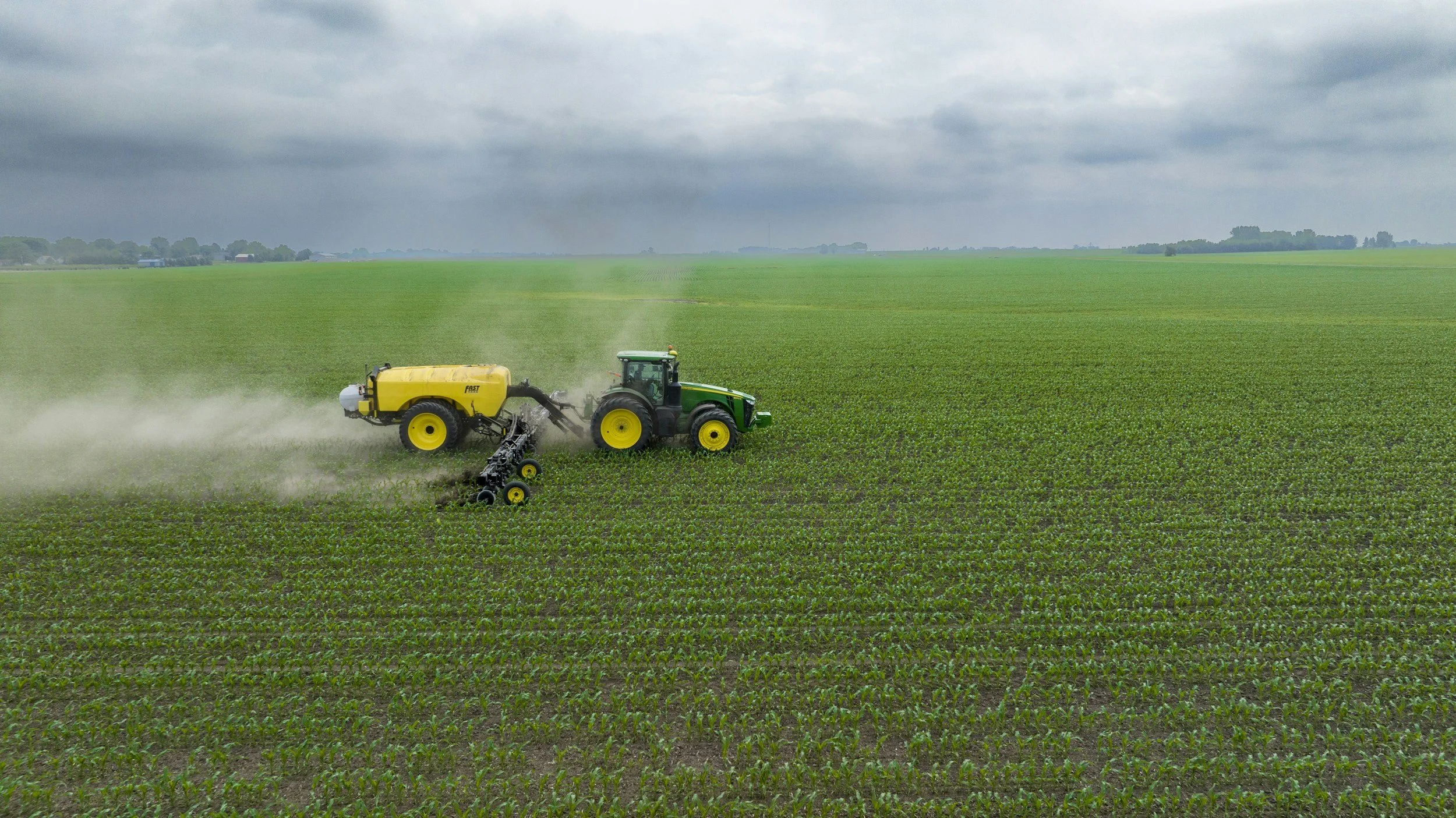
When environmental health becomes a Parkinson's conversation
One of the most significant Parkinson's-related policy developments in recent years has little to do with medications, surgical interventions, or new therapies.
Instead, it centers around pesticides and the growing body of research examining how environmental exposures may contribute to the development of Parkinson's disease.
For decades, Parkinson's was largely viewed through the lens of genetics and aging. While both remain important factors, researchers now recognize that environmental influences may play a substantial role in determining who develops the disease and how it progresses.
As a result, conversations about Parkinson's are expanding beyond symptom management and treatment to include prevention, public health policy, occupational safety, and environmental risk factors.
Vermont's Historic Paraquat Ban
In May 2026, Vermont became the first state in the nation to ban paraquat, a widely used herbicide that has been the subject of increasing scientific scrutiny due to its association with Parkinson's disease.
Paraquat has been used for decades in agriculture to control weeds and improve crop yields. However, numerous epidemiological studies have found that individuals exposed to paraquat—particularly agricultural workers and those living near treated fields—appear to have a significantly higher risk of developing Parkinson's disease.
Supporters of the Vermont ban argue that reducing exposure to chemicals linked to neurological disease is a common-sense public health measure. Critics, including some agricultural groups, contend that paraquat remains an important farming tool and that regulatory decisions should be based on definitive causal evidence.
Regardless of where one stands on the policy debate, Vermont's action reflects a broader shift occurring across the country: increasing attention to environmental contributors to chronic disease.
Federal Policy and the Current Administration
At the federal level, pesticide regulation remains under the authority of the Environmental Protection Agency (EPA), which periodically reviews the safety of agricultural chemicals and determines whether they can continue to be used under federal law.
Paraquat has become one of the most closely watched pesticides in these reviews.
In recent years, the EPA has maintained that paraquat can continue to be used when strict safety measures are followed, including specialized training requirements for applicators and restrictions designed to reduce accidental exposure.
However, advocacy organizations, environmental groups, and many members of the Parkinson's community have argued that these protections do not adequately address long-term neurological risks.
The current administration has faced increasing pressure from public health advocates, researchers, and lawmakers to reevaluate pesticide policies in light of emerging evidence linking certain chemicals to neurodegenerative diseases.
Several federal agencies, including the National Institutes of Health (NIH), the National Institute of Environmental Health Sciences (NIEHS), and the National Institute of Neurological Disorders and Stroke (NINDS), continue to fund research examining environmental contributors to Parkinson's disease.
In addition, lawmakers from both parties have introduced proposals aimed at increasing transparency around pesticide safety reviews, strengthening protections for agricultural workers, and expanding research into environmental causes of neurological disorders.
While no nationwide ban on paraquat currently exists, the policy debate continues to intensify as new research emerges.
What Does the Research Actually Show?
One of the most important questions for patients and families is whether pesticides actually cause Parkinson's disease.
The answer is complex.
Researchers generally agree that Parkinson's disease is multifactorial, meaning it likely results from a combination of genetic susceptibility and environmental exposures.
No single pesticide has been proven to cause Parkinson's in every case. However, decades of research have identified strong associations between certain agricultural chemicals and increased Parkinson's risk.
Paraquat
Paraquat is perhaps the most studied pesticide in Parkinson's research.
Multiple studies have found that individuals exposed to paraquat may have a significantly higher likelihood of developing Parkinson's disease compared to those without exposure.
Laboratory studies have also shown that paraquat can damage dopamine-producing neurons and increase oxidative stress—both mechanisms believed to play a role in Parkinson's pathology.
Researchers have noted that paraquat's chemical structure resembles MPTP, a compound known to induce Parkinson-like symptoms by destroying dopamine-producing brain cells.
Rotenone
Rotenone is another pesticide that has attracted significant scientific attention.
Animal studies have demonstrated that rotenone exposure can reproduce many of the hallmark features of Parkinson's disease, including:
Loss of dopamine-producing neurons
Alpha-synuclein accumulation
Motor impairments resembling Parkinson's symptoms
Several epidemiological studies have also linked occupational exposure to rotenone with increased Parkinson's risk.
Chlorpyrifos
Chlorpyrifos, an organophosphate insecticide, has been associated with neurological effects ranging from developmental disorders to neurodegenerative disease.
Although the evidence linking chlorpyrifos specifically to Parkinson's is less extensive than that for paraquat or rotenone, researchers continue to investigate whether long-term exposure contributes to neuroinflammation and neuronal damage.
Maneb and Other Fungicides
Researchers have also examined fungicides such as maneb.
Some studies suggest that exposure to both paraquat and maneb may produce a greater Parkinson's risk than exposure to either chemical alone.
This finding has led scientists to explore whether combinations of environmental exposures may be more important than any single chemical.
Landmark Studies on Parkinson's and Pesticides
Several major research efforts have helped shape current understanding of environmental risk factors.
The Agricultural Health Study
One of the largest and most influential investigations into pesticide exposure and health outcomes, the Agricultural Health Study has followed tens of thousands of farmers, pesticide applicators, and their families for decades.
Researchers have repeatedly identified associations between certain pesticide exposures and increased Parkinson's risk.
The Farming and Movement Evaluation (FAME) Study
This study examined pesticide exposure among agricultural workers and found elevated Parkinson's risk associated with several pesticides, including paraquat and rotenone.
The findings helped strengthen concerns about occupational exposure.
California Central Valley Research
Researchers studying agricultural communities in California's Central Valley found that individuals living near fields treated with paraquat and other pesticides experienced higher rates of Parkinson's disease.
These studies highlighted that risk may extend beyond workers directly applying chemicals and could affect nearby residents as well.
Gene-Environment Interaction Studies
More recent research has focused on how genetics and environmental exposures interact.
Scientists have discovered that individuals carrying certain genetic variants may be more vulnerable to the effects of pesticide exposure.
This may help explain why some people develop Parkinson's after exposure while others do not.
Why This Matters for Prevention
For many years, Parkinson's discussions focused almost exclusively on what happens after diagnosis.
Today, researchers are increasingly asking a different question:
Can some cases of Parkinson's be prevented?
While there is currently no guaranteed way to prevent Parkinson's disease, understanding environmental risk factors may help reduce exposure to potentially harmful substances and inform future public health strategies.
This shift has important implications for:
Agricultural worker safety
Environmental regulations
Community health protections
Occupational exposure standards
Public awareness and education
Future prevention efforts
Looking Ahead
The science surrounding Parkinson's disease and pesticide exposure continues to evolve.
Researchers are still working to determine exactly how environmental toxins contribute to neurodegeneration, which populations face the greatest risks, and what interventions may reduce those risks.
What is becoming increasingly clear, however, is that Parkinson's disease cannot be understood solely through genetics or aging.
Environmental factors appear to be an important piece of the puzzle.
As policymakers, scientists, healthcare providers, and patient advocates continue this conversation, the focus is expanding beyond treatment alone.
The future of Parkinson's care may involve not only helping people live better after diagnosis but also identifying ways to reduce risk before symptoms ever begin.
The Parkinson's conversation is evolving.
It is no longer only about treatment.
It is increasingly about prevention, education, environmental health, and understanding the bigger picture.
The TPPF Perspective
At The Parkinson's Project Foundation, we believe Parkinson's conversations should include more than treatment alone.
Treatment matters. Research matters. But understanding potential causes and risk factors matters too.
Whether future research strengthens or weakens the connection between pesticides and Parkinson's disease, we believe people deserve access to information and the opportunity to make informed decisions about their health.
We also believe prevention deserves a larger place in the Parkinson's conversation. While there is currently no guaranteed way to prevent Parkinson's disease, understanding environmental and lifestyle factors may help researchers identify ways to reduce risk and improve public health for future generations.
Progress begins with asking questions, following evidence wherever it leads, and ensuring patients remain part of the conversation.
